For several years, Jon Prosser has established himself as one of the most visible faces in the world of Apple rumors, regularly posting videos on his Front Page Tech YouTube channel. He specializes in presenting prototypes inspired by internal documents or supply chain leaks.
In July 2025, he was the target of a complaint from Apple after having distributed confidential elements of iOS 26, which seems to have pushed him to review his method. It now relies on information already shared elsewhere, but places emphasis on the visual quality of its videos. After presenting a prototype of the folding iPhone last December, the videographer gives us this time a realistic model of the iPhone 18 Pro, designed from the already known leaks.
A polished prototype, but without any big surprises
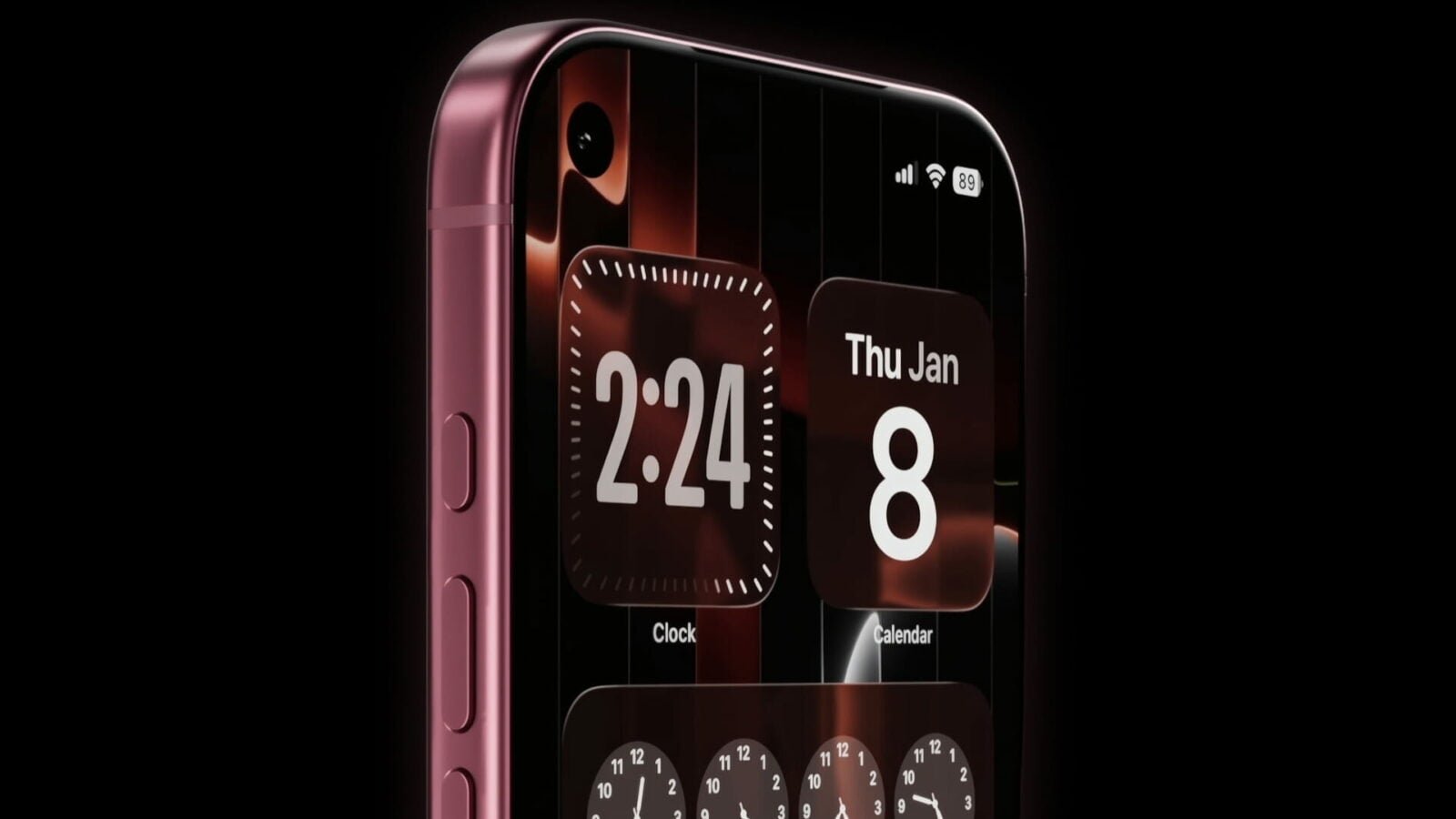
Jon Prosser opens his video with an iPhone 18 Pro prototype based on rumors already consolidated in recent months. The back of the phone is directly reminiscent of that of the iPhone 17 Pro, but once the front is revealed, we discover a display that is more reminiscent of an Android device.
The front camera is isolated in the upper left corner, with the rest of the Face ID system which would be hidden under the screen. According to a recent report from The Information, Apple has finally managed to overcome the technical problems it encountered with the integration of Face ID under screen. It was indeed expected that the iPhone 18 Pro would retain a visible but smaller pill. Here is the video:
No products found.
The iPhone 18 Pro could also be offered in new shades such as dark brown, deep purple and deep burgundy. These colorways were first mentioned by Instant Digital in October 2025.
Realistic technical developments, validated by leaks
The iPhone 18 Pro could additionally adopt a lighter version of the Camera Control button, based only on pressure. Apple plans to remove the capacitive sensor and the sapphire crystal surface to retain only the pressure sensor, which is less expensive to produce and simpler to repair.
Another likely change is that the main camera would adopt variable aperture, a technology that allows the entry of light to be mechanically adjusted according to conditions.

By: Keleops AG